

We crossed 1,000 subscribers! Thank you very much for your support.
Next week, I will take a break. I will return the following week (Mon 28 Sep 2026).
I want to achieve two goals during the break.
First, how can I make this newsletter more useful to you?
If you have any feedback, I will be very happy to hear from you.
Thanks to the readers who wrote in and suggested improvements. Where practical, I have already started implementing the feedback.
Finally, I will also be using the break to prepare for my interviews in Singapore. More on that after the break.
Today’s topic is a very important lesson I learnt during my time in the industry.
Let’s dig in.
You invested in an equity fund. It is down -30% this month. What’s your reaction?
“This is just volatility. Not risk”
“What is going on?!?”
Like most investors, you will probably choose the second option. Pick up the phone, summon the portfolio manager (if you can get hold of them). Listen to explanations. Dismiss them as pathetic excuses. Withdraw your money.
When enough investors do this, the fund eventually collapses.
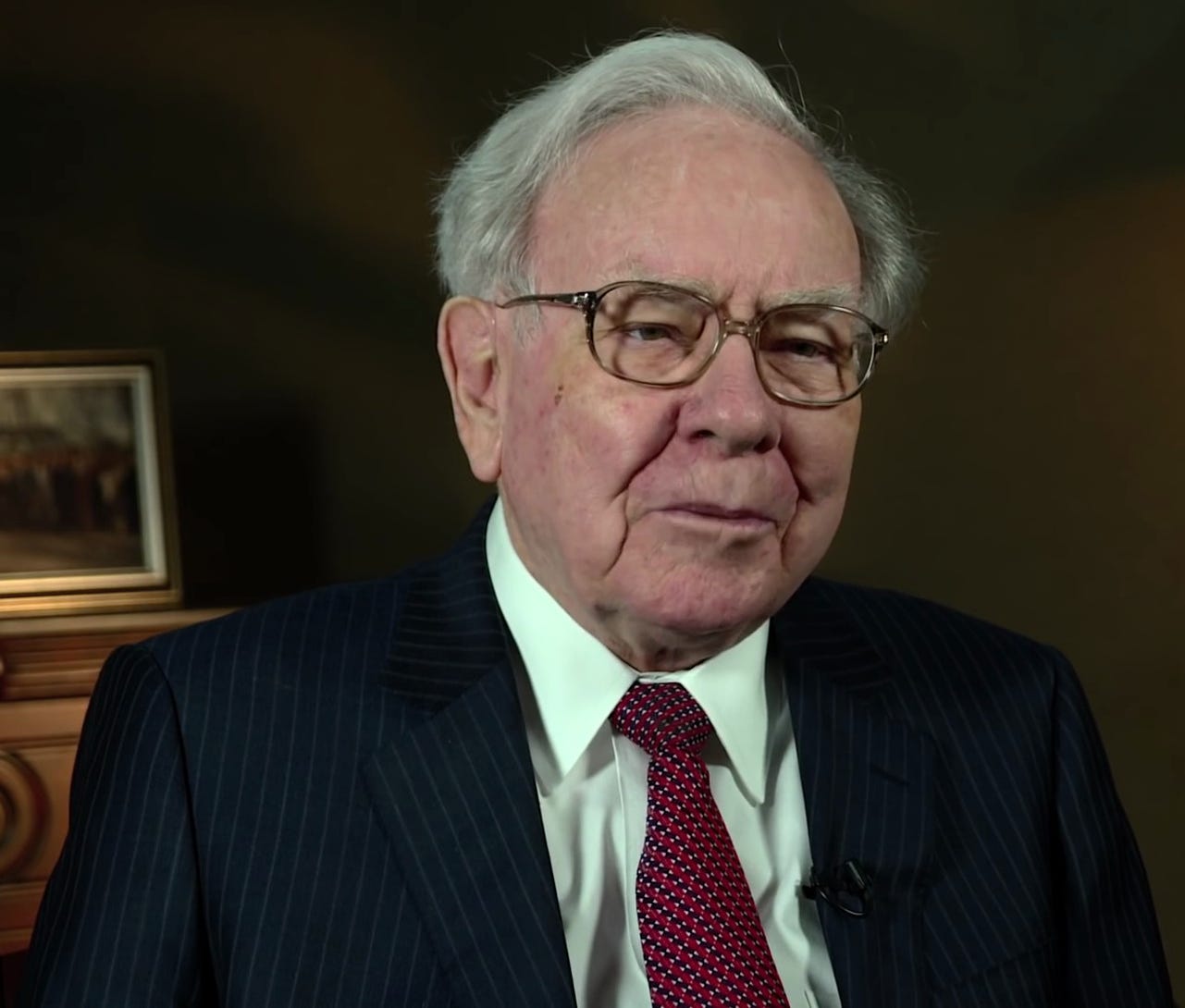
Warren Buffett and Charlie Munger said volatility is not risk. Permanent capital loss is the true risk.
Source: Wikipedia (2026)
.jpg)
For this to be true, I realised you need to fulfill 3 conditions:
Permanent capital
Proper investment thesis
Emotional stability
In the first example, the portfolio managers (PM) has done their research properly. They are emotionally stable. They are willing to hold until the thesis plays out in the long-term.
But the fund still collapses.
Their investors pulled out. They don’t know whether the -30% drawdown is just volatility or permanent capital loss. After all, the investors have not researched the stocks. How can they have conviction that the stocks will eventually recover?
In Buffett’s case, he can ignore volatility. He knows what he is doing, and he doesn’t balk when stock prices fall (at least not publicly). Above all, he has permanent capital. That’s a very very strong competitive advantage.
For the rest of us who have to report monthly results, we will need to find ways to manage volatility.
A stable 15% return is always better than a volatile 15%
How to (try to) manage volatility
The easiest and cheapest is diversification. But you’ll still be exposed to market movements (beta). So you short stocks too. That’s long/short equity. But long-only funds cannot short.
Before Buffett had permanent capital, he used ‘work-outs’ to manage volatility:
Our second category consists of “work-outs.”
These are securities whose financial results depend on corporate action rather than supply and demand factors created by buyers and sellers of securities…
Corporate events such as mergers, liquidations, reorganizations, spin-offs, etc., lead to work-outs.1
He goes on to explain the benefits:
This category will produce reasonably stable earnings from year to year, to a large extent irrespective of the course of the Dow. (emphasis mine)
One of Buffett’s common trades is betting on the completion of an announced merger or acquisition. Nowadays, this is called ‘merger arbitrage’.
Here’s how it works.
After a merger is announced, the target’s share price would often rise to near, but not quite exactly the offer price.
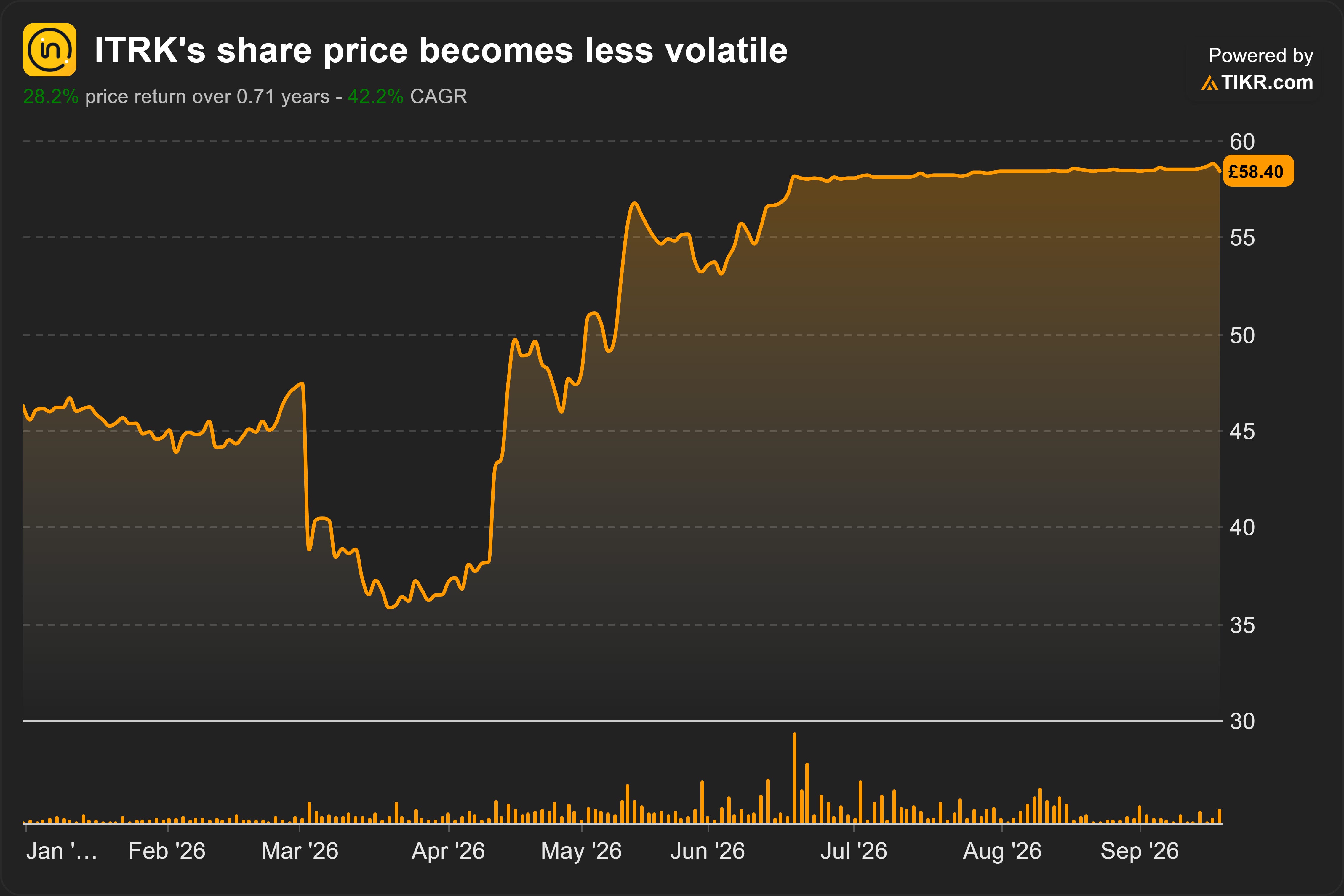
A recent example is EQT’s takeover of Intertek Group plc (ITRK LN). The private equity (PE) firm offered GBP 60.00 per share.2 The share price today is GBP 58.40
If you buy ITRK shares today and the deal closes by year-end, you will earn ~3%. This is ~12% annualised.
Best of all, ITRK’s share price becomes more dependent on the deal closing and less correlated with general market movements. In other words, less volatile.
But this is not a free lunch.
If the deal falls through, the share price will collapse. You’re looking at a -35% loss if the price collapses to the pre-deal levels.
It is this asymmetric payoff that makes me hesitate.
Buffett himself admits:
A friend refers to this as getting the last nickel after the other fellow has made the first ninety-five cents.
That brings me to the question: How can I be the other fellow that has made the first 95 cents?
My strategy here is:
If I buy undervalued shares, I will be exposed to market volatility. But if I buy undervalued shares with higher-than-expected probability of a takeover, I can generate higher returns with lower volatility.
This strategy seems to be working.
Despite the bear market in 2022, my portfolio returned +7% in 2022, largely due to a takeover.
Here’s a preview of the framework I’ve developed:
Factors that increase the probability of a takeover
Management is reaching retirement age without a clear successor (RFX LN)
Company owned by a PE fund + PE fund near maturity (CTOS MK)
Management restructuring the business into independent segments that can be easily sold (PYPL US)
Management starts cutting costs and ‘long-bets’ to improve profitability (PYPL US)
Professional and consulting fees increase significantly. This detail can be found in the accounting footnotes
Divestment of non-core assets (CTOS MK)
Appointment of new board members or C-suite with PE experience (YOU LN, ACL AU)
Activist investor pushing for sale (YOU LN)
Peers in the industry being acquired (RFX LN, PETS LN)
PE firm raising new funds targeting a specific sector
Major shareholder steadily buying more shares (NEC AU)
Competitor announcing intentions to grow via acquisitions
Target generates stable free cash flow + low debt
Factors that decrease the probability of a takeover
Controlling family who sees the company as a crucial part of their empire
Huge overlap between the target and acquirer’s market
Takeover depends on complex financing
Acquirer is already highly levered
Target operates in a politically sensitive industry
Coming up next
After my break, I’ll be back with 2 to 3 more interesting ideas.
I’ll then analyse the most voted idea from my last post.
Right now, that’s Mortgage Advice Bureau (MAB1 LN). Haidilao (6862 HK) is the runner-up.
Haven’t voted yet? Check out my last post: 2 More Attractive Ideas
Thanks for reading! If you found this helpful, hit the “like” button.
If you’re not already a subscriber, sign up for weekly analysis on global SMID equities.
Disclaimer
This publication is for informational, educational, and entertainment purposes only and does not constitute financial, investment, legal, or tax advice. The content herein is a record of my personal research and investment process, and all analysis, forecasts, and opinions expressed are solely my own.
I make no representation or warranty, express or implied, as to the accuracy, completeness, or timeliness of the information provided. The stock market is highly volatile, and my forecasts, estimates, and assumptions may prove incorrect.
I am not acting as your financial advisor or fiduciary. You should not rely on any information in this publication to make investment decisions. Under no circumstances will I be held liable for any direct, indirect, or consequential losses or damages arising from your reliance on the content of this publication.
At the time of publication, I do not hold any positions in the companies mentioned in this article, either long or short. I may change my views, predictions, or personal portfolio positioning at any time without notice.