

I can’t believe I am reaching my 100th post.
Today’s post is a reflection:
Who is behind this newsletter?
5 useful lessons from writing ~ 100 stock pitches
What’s next?

Who is behind this newsletter?
I am Andrew Wong, ACA, CFA, an equity analyst in Singapore.
I started my career in audit. After three years, I realised public equity investing is far more interesting.
I took the equity analyst roles that came the easiest. I didn’t think much and just wanted to start analysing companies.
When I left my role earlier this year, a few funds asked me to interview. I am grateful, but eventually decided to take a short break and explore Substack.
Regular readers will know that I just started interviewing.
Everything I know today is mostly self-taught. If I can outperform despite limited resources, how much better can I perform in an experienced team with a proven track record?
If you were in a similar situation or simply want to share your advice, I would love to hear from you. You can reply to this email or comment below.
Alright, let’s talk about about the 5 useful lessons.
5 useful lessons from writing ~ 100 stock pitches
1. Focus on change
I used to think along the lines of “Company A holds the largest market share. Buy! Company B will grow 10%. Buy!”
After managing my own portfolio and writing on Substack, I realised change, especially unexpected change, is far more important.
To illustrate this point, I have a very good example.
Nike is the largest sports brand in the world. But its share price has fallen more than -75%. Why?
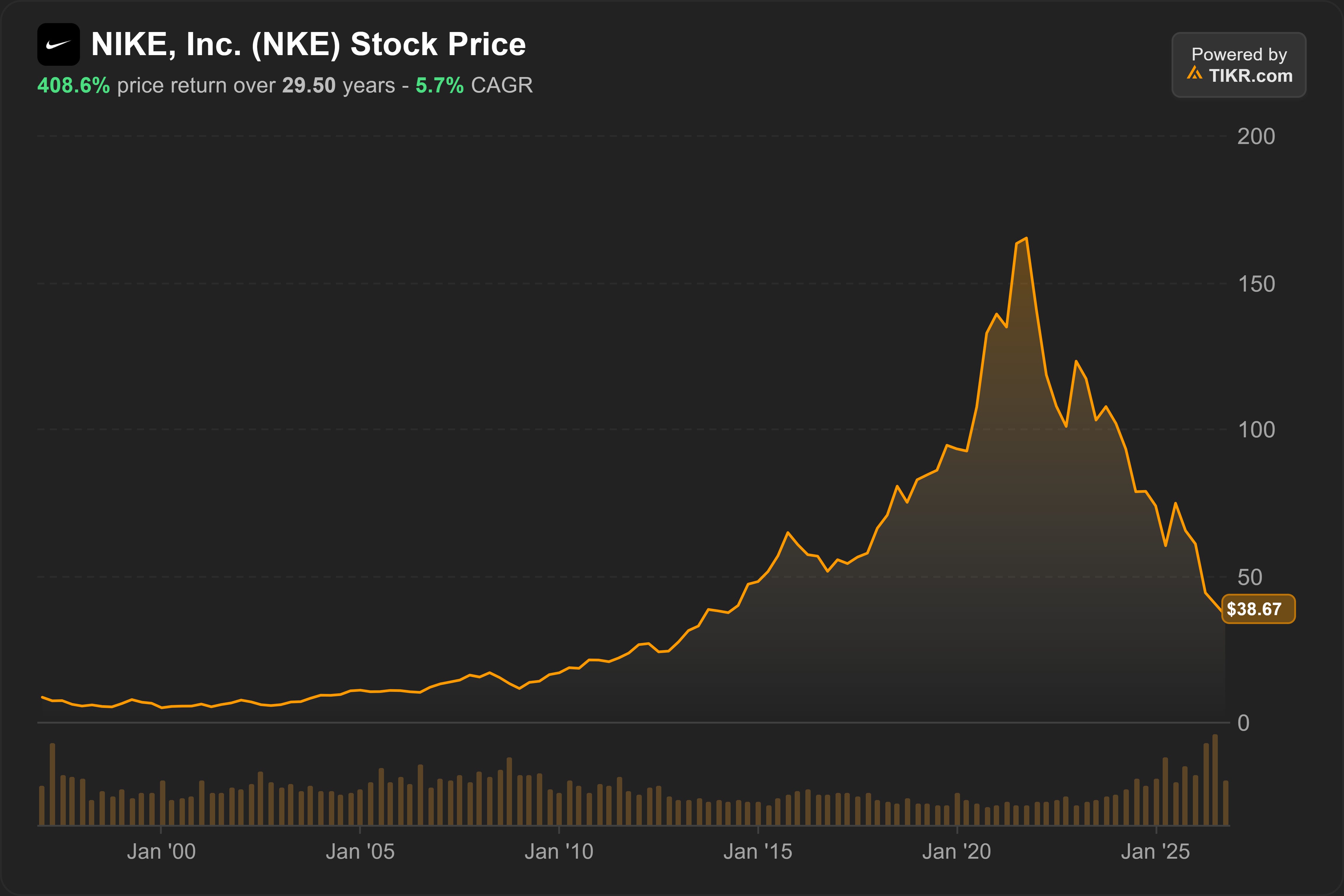
Despite being the top-selling sports brand, Nike is losing market share:

Source: Reuters (2024)
Change, especially unexpected change, is more important.
Instead of:
Company A is the market leader with 60% market share
Over the next 3 years, EPS will grow 10% p.a.
The business is capital-light
Focus on:
Although Company B holds only 5% market share today, it is gaining market share
Because of its new patented products, EPS will likely grow faster than consensus’ expectations
The business used to be capital-intensive. With the pivot into the new segment, the business is becoming more capital-light
2. Find out what’s important (and what’s not)
Investing is laying out cash today for more cash in the future.
Three key questions:
How much cash will the business generate?
What will management do with the cash?
How much are we paying up today for future cash?
Whatever that can impact cash flow significantly is important. This can differ across sectors.
Retailing is about moving goods that customers want, to where they want it, and at the prices that they want.
Pay attention to days inventory, inventory aging, inventory write-down, same-store-sales, store count, etc. When doing site visits, look at shelf availability, number of discounted goods, warehouse utilisation, etc. Thick layer of dust over key products is a big red flag.
For cyclical industries like semiconductors, pay attention to changes in supply vs demand.
Supply: capex growth and inventory changes (especially finished goods). Demand: capex growth at hyperscalers, PC and smartphone shipment, etc.
If supply grows faster than expected, the industry flips into a glut and prices collapse.
In telecommunication, regulation is among the most important factors.
I’ve seen investors spending a lot of due diligence on customer satisfaction, management quality, etc.
But all that doesn’t matter if the regulator decides to let a new player into the industry.
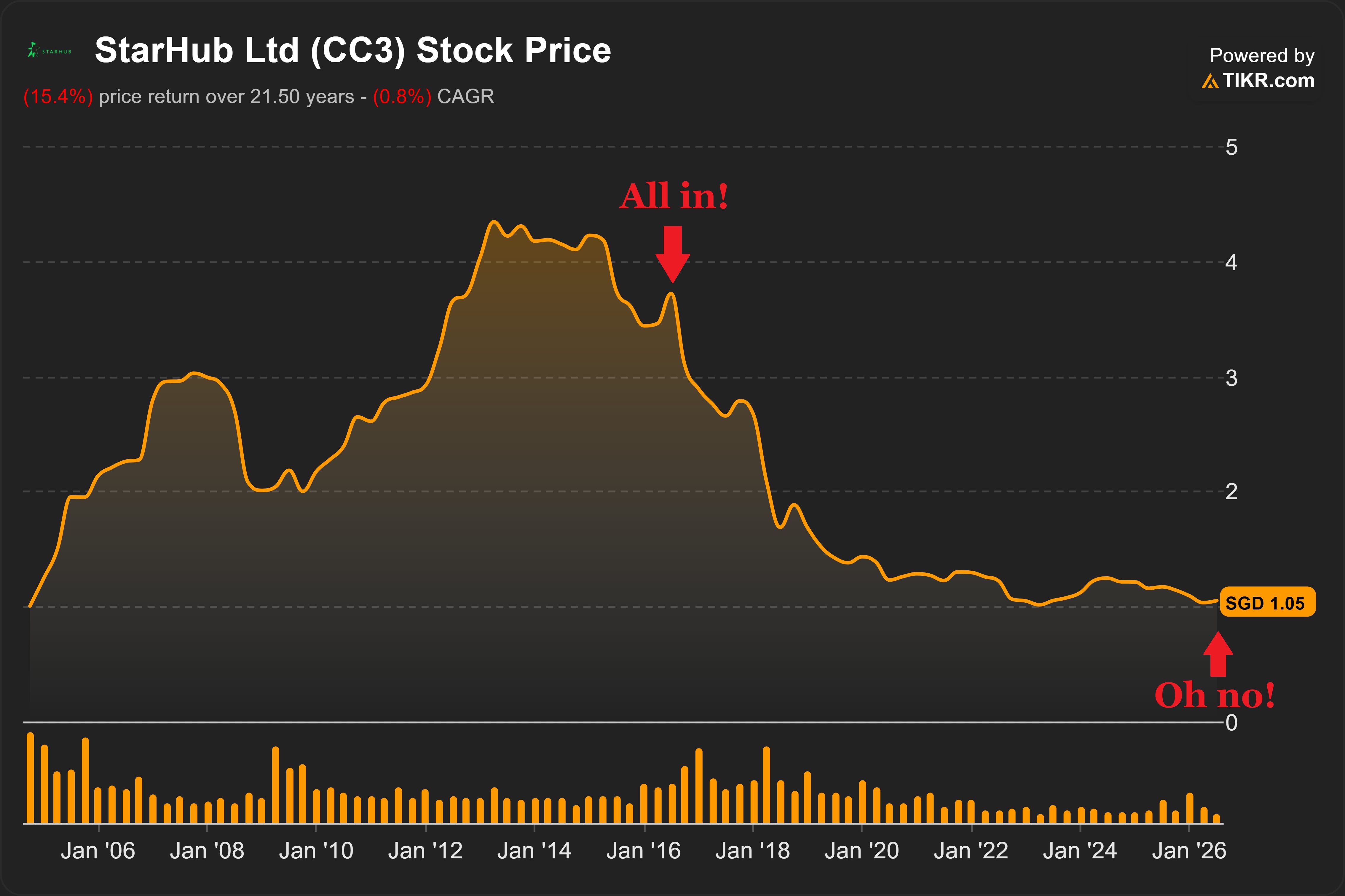
Investors in StarHub Ltd (CC3; STH SP) found out the hard way in 2016, when the regulator allowed Tuas Limited (TUA AU) to enter:
3. Avoid unintended bets
Know the non-fundamental factors that can impact the business and its shares, and avoid making unintended bets on them.