

This week, I have prioritised my full thesis for RSTON SP. I will publish my analysis on MEITEC Group Holdings (9744 JP) next week instead.
[Long] Riverstone Holdings Limited (AP4; RSTON SP)

12 November 2026
Share price: SGD 0.74
Market capitalisation: SGD 1,097 mn (USD 854 mn)
Enterprise value (EV): SGD 915 mn (USD 712 mn)
Average daily volume (ADV): SGD 1.4 mn (USD 1 mn)
Free cash flow to firm yield on EV: ~8.5%
NTM P/E: 14x
My decision
Long RSTON SP.
Risk/reward is attractive. Over 3 years, I expect a total return of 22% p.a. If recovery is slower than expected, this will likely fall to 10% p.a. In the bull case, 30% p.a. can be achieved.
After COVID-19 ended, the gloves industry flipped from a shortage into an oversupply. Shares in glovemakers like RSTON sold off.
Like its peers, RSTON reported a recovery in Q2’26. Shares in its peers re-rated, but not RSTON. Investors seem to doubt the sustainability of its recovery.
RSTON’s recovery will likely be sustainable.
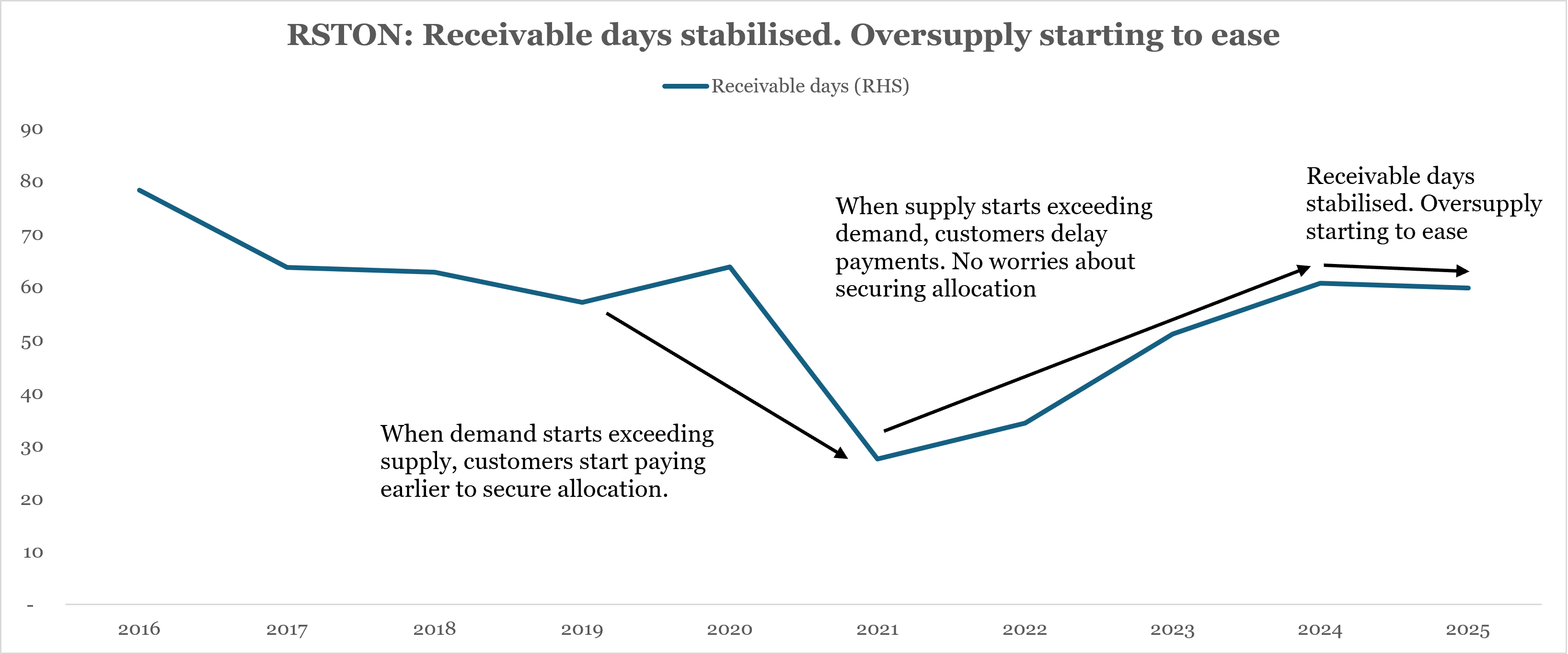
Working capital analysis shows demand is recovering: (a) receivable days stabilised (more customers paying on time) and (b) finished goods fell faster than raw materials.
As major customers open new factories and ramp up production through 2027, demand will continue to improve.
RSTON is reaching a cyclical inflection point, but investors are overlooking this.
Catalyst: Attractive capital return. As earnings continue to recover, RSTON’s dividend yield will likely reach 8% or more.
The risk of another oversupply is low. The industry has cleared excess inventories. Major players have restricted growth capex. A channel check reveals glovemakers are raising prices faster than cost inflation.
Competition from Chinese glovemakers will likely be limited. Tariffs in the US and (likely soon) in Europe will help level the playing field. High technical requirements and a smaller market size make cleanroom gloves (66% of gross profits) unattractive to competitors.
Business
RSTON makes two types of gloves:

Healthcare gloves are used by doctors and nurses during medical examinations. Cleanroom gloves are used in the semiconductor and pharmaceutical industries, where technical requirements are more stringent.
Cleanroom gloves carry a much higher gross profit margin (GPM) because of high customisation and stringent technical requirements. Few players can manufacture cleanroom gloves like RSTON. According to management, RSTON holds ~ 40% market share worldwide for cleanroom gloves.1
Thesis
(1) Cyclical inflection
Major glovemakers are reporting a cyclical recovery.
Ansell Limited (ANN AU), a direct competitor to RSTON’s cleanroom segment, reported accelerating revenue growth. During the six months ended 30 June 2026 (H2’26), ANN’s Cleanroom revenue grew +17% YoY, up from +3% YoY in H1’26.2
Top Glove Corporation Bhd. (TOPG MK) competes against RSTON in its healthcare segment. TOPG reported better-than-expected earnings for the quarter ended 31 August 2026. In early October 2026, TOPG’s management explained:
“Demand and supply growth are now becoming more balanced, contributing to a healthier market environment and providing a more stable foundation for margin recovery after several challenging years.”3
RSTON is reporting a recovery too.
Like its peers, RSTON reported better results in Q2’26.
Revenue returned to growth in Q2’26 (+9% YoY). This is an improvement from -15% YoY in Q1’26 and -1% YoY in Q2’25. GPM jumped to 36% in Q2’26. This is up from 27% in Q2’25 and 29% in Q1’26.
Management explained the improvement was mainly driven by higher average selling prices (ASPs). This echoes TOPG’s observation that oversupply is starting to ease.
Investors started to re-rate shares in major glovemakers. But not RSTON.
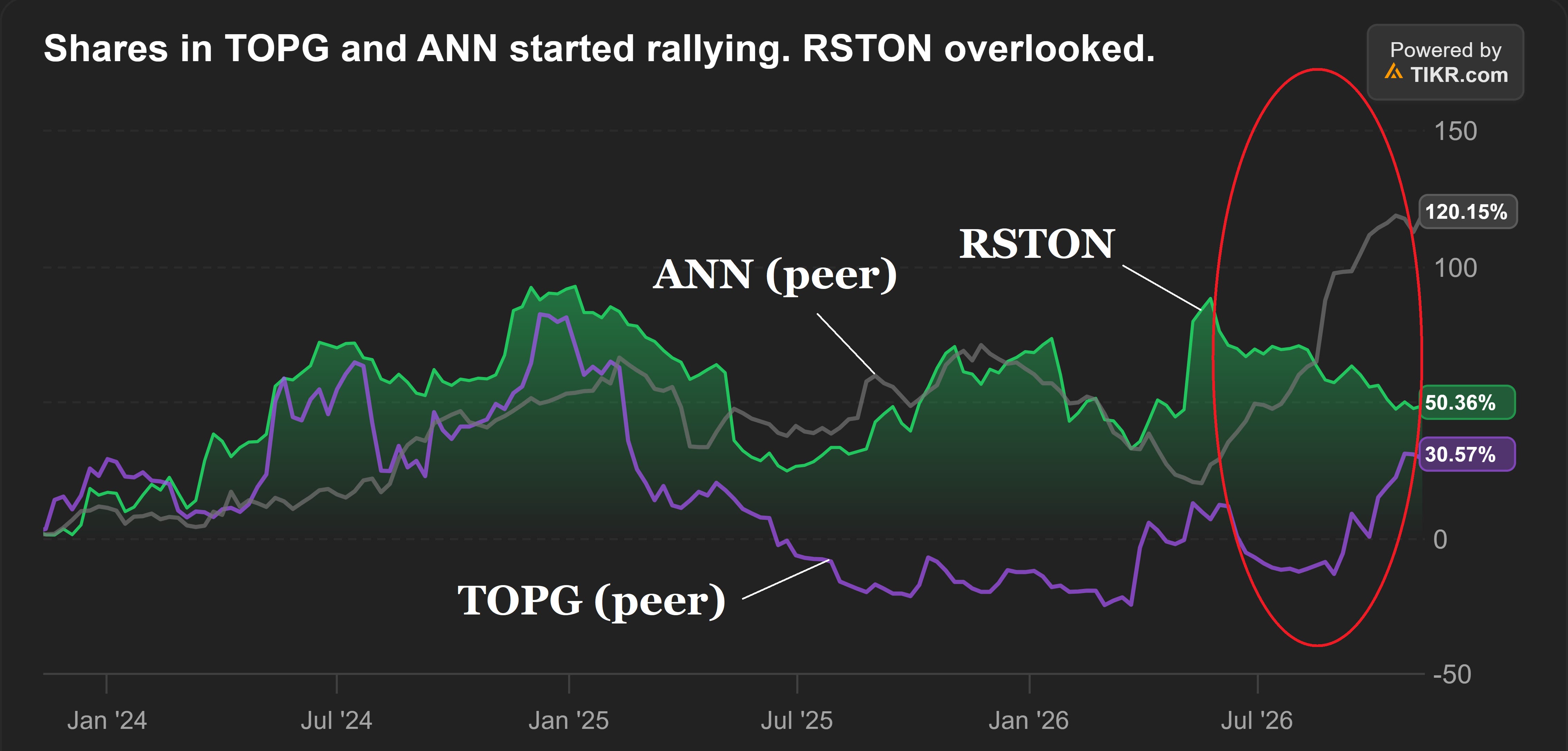
Since July 2026, shares in major glovemakers like TOPG and ANN have rallied.
But RSTON shares fell.
Investors seem to doubt the sustainability of RSTON’s recovery. But its recovery is likely sustainable.
“Between 2023 and 2024, RSTON’s revenue growth and GPM recovered but it was short-lived. How sustainable is this recovery?”
Two reasons why I believe this recovery is sustainable.
First, favourable working capital trends. During the 2023 – 2024 recovery, receivable days continued increasing. Customers were still delaying payments, suggesting that recovery would be short-lived. That was what happened.
This time, receivable days have stabilised. More customers are paying on time, suggesting that oversupply is starting to ease and a more durable recovery.
Another favourable working capital trend: Raw spread = raw materials growth – finished goods growth.